
Penile Implant Types Compared: What Global Evidence Shows
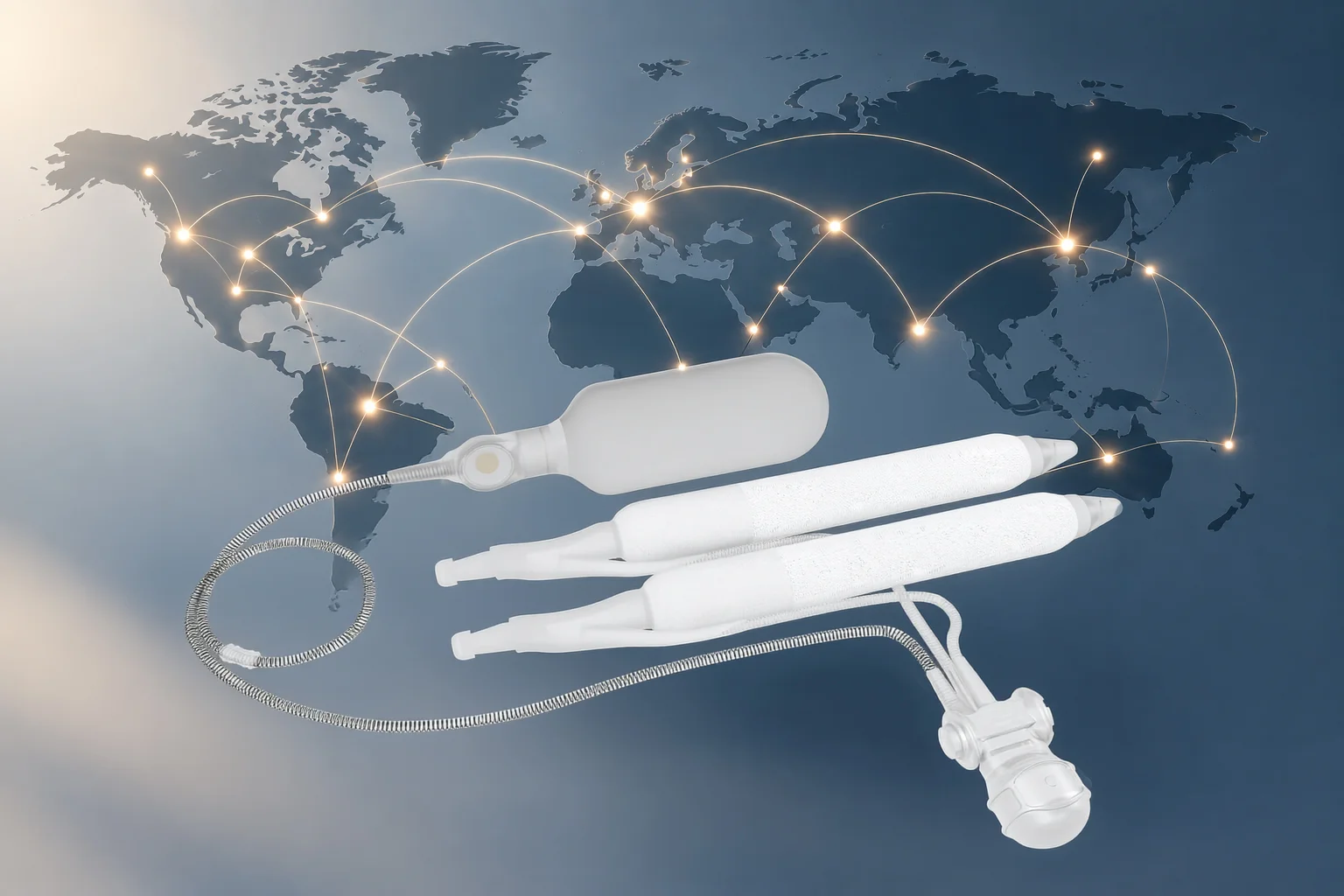
Penile implants come in two classes, inflatable devices with two or three pieces and semi-rigid devices such as malleable rods. In the studies reviewed by the American Urological Association, mean satisfaction was 86.2% with inflatable models and 75.1% with malleable ones. No randomised trial has compared satisfaction between the two, so the choice rests on anatomy, hand function, cost and preference.
What types of penile implant are there?
Penile implants fall into two classes. Inflatable devices come in two-piece and three-piece designs, and semi-rigid devices include malleable, mechanical and soft flexible models.
In a three-piece inflatable implant, a reservoir of fluid sits low in the abdomen, a pump sits in the scrotum and two cylinders lie inside the penis. Pressing the pump moves fluid into the cylinders to produce an erection, and a release mechanism sends it back to the reservoir afterwards. A two-piece design works the same way without a separate reservoir.
Patients may prefer three-piece devices for the more natural erection they produce. A two-piece design is an option when placing a reservoir carries a higher risk, for example after previous abdominal surgery.
A semi-rigid implant keeps the penis firm at all times and is bent upward for intercourse and downward otherwise. The operation is simpler and the device is easy to use, but the penis stays permanently firm and is harder to conceal.
How satisfied are men with each type of implant?
Satisfaction with penile implant surgery is among the highest of any treatment for erectile dysfunction. The European Association of Urology (EAU) reports satisfaction of 92% to 100% in patients and 91% to 95% in partners, with appropriate counselling.
The American Urological Association (AUA) breaks the figures down by device. Mean satisfaction across the studies it reviewed was 86.2% for inflatable models and 75.1% for malleable models. By model group, the ranges were 85.6% to 88.3% for inflatable devices and 66.1% to 88.7% for malleable ones.
The two sets of figures come from different studies and are not directly comparable. No prospective randomised trial has compared satisfaction between inflatable and semi-rigid implants, most of the evidence is observational, and few studies used validated questionnaires. In one study, men whose expectations before surgery were more realistic were also more satisfied afterwards.
How long do penile implants keep working?
A meta-analysis of penile implant survival found that 93.3% of devices were still working at one year, 91.0% at three years, 87.2% at five years, 76.8% at ten years, 63.7% at fifteen years and 52.9% at twenty years.
Mechanical failure is most common with inflatable implants. It usually happens when a component, most often the connecting tubing, ruptures and fluid leaks out. Design refinements have reduced these failures over time, and the most commonly used three-piece devices show mechanical failure rates below 5% after five years. Malleable implants contain no fluid, so a leak of this kind cannot happen.
How do complication rates differ between implant types?
Infection is the main complication of penile implant surgery besides mechanical failure. It usually appears within the first three months and usually requires removal of the device. After a first implant in low-risk patients in high-volume centres, the infection rate is 2% to 3%, and it falls to 1% to 2% with antibiotic-impregnated or hydrophilic-coated devices. In one study, screening for nasal Staphylococcus aureus and treating carriers before surgery cut surgical site infection from 4.4% to 0.9%.
Erosion occurs when tissue at the tip of the penis weakens and a cylinder moves into the head of the penis, which then needs surgical repair. Average erosion rates were lower with inflatable implants, at a mean of 2.5% across 20 studies, than with malleable implants, at a mean of 4.1% across 7 studies. Individual studies reported rates of up to 6.5% for inflatable and 17.5% for malleable implants, and across all implants, impending erosion occurs in 1% to 6% of cases.
Loss of blood supply to the glans with tissue death, called ischaemia and necrosis, has been reported in about 1.5% of patients. These serious complications are more likely in men with significant vascular disease, such as diabetes, or when a lengthening procedure is done at the same time.
Which men have a higher risk of implant complications?
In published series, men with spinal cord injury had implant infection rates of up to 16%. In a large US insurance database, low testosterone, or hypogonadism, was independently associated with implant infection.
The two guidelines differ on diabetes. The EAU cites a large database study identifying diabetes as a risk factor for implant infection. The AUA cites a systematic review that found no relevant current evidence of a higher infection risk in diabetic men, with most recent studies reporting rates of 2% or less since antibiotic-coated implants came into use.
When an implant does become infected, removing it and placing a new device in the same operation after a wash-out succeeds in more than 80% of cases. This approach is suitable only for men without sepsis or severe local infection.
What does an implant change, and what does it leave unchanged?
Inflatable and malleable implants both make the shaft rigid, but the glans does not usually become rigid. An implant has no direct effect on sex drive and does not enhance orgasm or ejaculation.
Some men feel the penis is shorter after implant surgery. In one study, mean erect length was 13.2 cm before surgery, measured after a drug injection, and 12.5 cm one year after an inflatable implant. The penis can also seem shorter because of weight gain over the pubic area or because the glans does not swell during an implant erection. Men with scarring of the erectile tissue are told that an implant is unlikely to restore the size they had before the scarring.
How is the choice between implant types made?
Before surgery, the differences between inflatable and malleable implants are explained, including how easy each is to operate, how it looks and how easily it can be concealed. For an inflatable implant, the steps of operating the pump are demonstrated so that the man and his partner are confident using it.
"Although generally higher satisfaction rates are associated with inflatable devices, there are some circumstances in which a malleable implant is more appropriate (e.g., limited manual dexterity, cost concerns)." Source 2, p. 32
Two-piece inflatable models are easier to operate than three-piece ones and may suit a man with poor manual dexterity who still wants a hydraulic device. They are also an option where an abdominal reservoir may pose a risk, for example after extensive scarring or a kidney transplant. Malleable implants can be bent to lie flat against the groin but cannot be deflated.
No head-to-head studies have compared different manufacturers' devices or shown one implant type to be superior, and no difference in efficacy or safety has been demonstrated among the implants available. The choice therefore rests on hand function, anatomy, cost and personal preference, decided together with the surgeon.